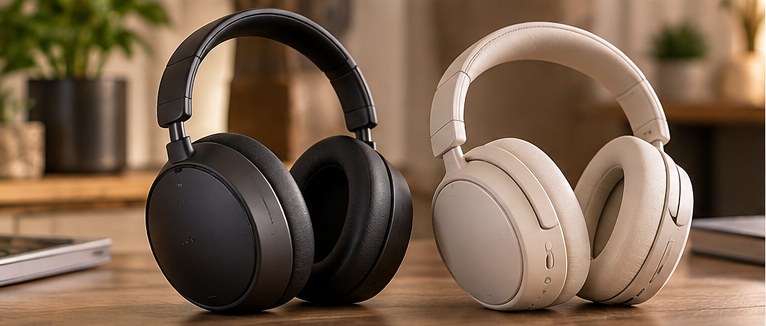
Sony's WH-1000XM6 and Bose's QuietComfort Ultra Headphones (2nd Gen) are close enough that a generic “best headphones” label is not very useful. Both cancel noise extremely well, both fold for travel and both cost enough that fit should be part of the decision.
Independent testing from RTINGS gives Sony a small advantage in overall isolation and microphone performance, while Bose has roomier padding and more consistent fit for some people, including glasses wearers. [1]
Choose Sony if you want more control
The WH-1000XM6 supports Sony's Sound Connect app, multipoint pairing and a broad set of sound adjustments. RTINGS notes a 10-band equalizer and strong noise cancellation. [2]
Sony's touch controls also provide more gestures than Bose's simpler approach. Some people love that. Others prefer physical buttons because they are easier to operate without thinking.
If you take a lot of calls, Sony's microphone performance is another reason to start there. No Bluetooth headset replaces a dedicated boom mic in a noisy office, but the difference can matter when calls are part of the purchase.
Choose Bose if comfort is the deciding factor
Bose lists up to 30 hours of playback in Quiet or Aware mode on the second-generation Ultra, and 23 hours with Immersive Audio. [3] The design retains the padded, foldable shape that made QuietComfort headphones popular for travel.
Fit is where specifications stop helping. RTINGS found the Bose roomier than Sony's shallower ear pads. [1] If your ears touch the inside of Sony's cups or your glasses break the seal, Bose may outperform Sony for you even if a lab gives Sony the stronger isolation score.
That is why headphones are worth trying on. Ten minutes of wear can tell you more than another page of features.
Noise cancellation is already excellent on both
At this price, the useful question is not whether active noise cancellation works. It is which noises you want reduced and how the headphones behave on your head.
RTINGS currently places WH-1000XM6 among its strongest noise-canceling options and describes the Bose second-generation Ultra as a close alternative. [2]
For airplane rumble and commuting, both are legitimate choices. For voices, office noise and wind, performance can vary more. Test them in the environment that matters to you if possible.
Do not pay extra for spatial audio unless you use it
Bose includes Immersive Audio and a Cinema mode. Sony has its own 360 Reality Audio ecosystem. These features can be enjoyable, but they are not the core reason to spend $400-plus.
Start with ordinary stereo music, podcasts and calls. If the headphones sound good and stay comfortable there, spatial processing is a bonus. If you dislike the basic tuning or fit, an immersive mode will not fix the purchase.
The cheaper deal can be the right answer
Flagship headphones are frequently discounted. A $100 price gap can be more important than the last few percentage points of noise isolation. Compare current prices, return policies and whether you need wired USB audio or a particular Bluetooth codec.
If prices are close, Sony is the more flexible all-around recommendation for people who want EQ control, strong noise cancellation and better call performance. Bose is the better starting point for buyers who put comfort first or who already know the QuietComfort fit works for them.
Sources
[1] RTINGS, Sony WH-1000XM6 vs. Bose QuietComfort Ultra Headphones (2nd Gen).
[2] RTINGS, Best noise-canceling headphones of 2026.
[3] Bose, QuietComfort Ultra Headphones (2nd Gen) specifications.